
UKGC regulatory settlements: what Section 117 of the Gambling Act 2005 means in practice
A UKGC regulatory settlement under Section 117 of the Gambling Act 2005 is a distinct regulatory mechanism, not a penalty by another name. This page explains how settlements work, why both the regulator and operators use them, where the money goes, and how Saferwager's severity framework treats settlements against direct financial penalties.
Filter by Action Type
Regulatory Settlements List
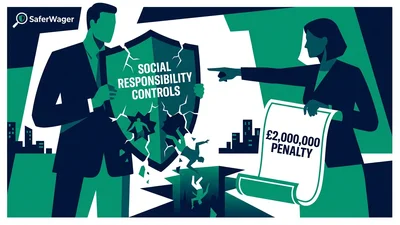
PPB Counterparty Services Limited
Regulatory SettlementFollowing a compliance assessment, the Gambling Commission found social responsibility failings across four licensees trading as Paddy Power and Betfair. The licensees, including PPB Counterparty S...
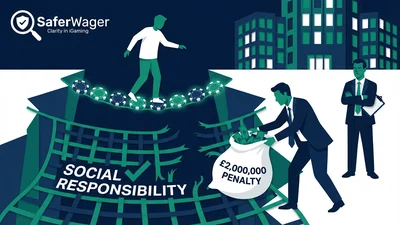
Betfair Casino Limited
Regulatory SettlementA licence review following a compliance assessment found failings in the operator's Social Responsibility (SR) controls, specifically regarding remote customer interaction. As part of a regulatory ...

TSE Malta LP
Regulatory SettlementFollowing a compliance assessment, TSE Malta LP and three other related licensees were found to have failings in their Social Responsibility controls, specifically regarding remote customer interac...

PPB Entertainment Limited
Regulatory SettlementFollowing a compliance assessment, PPB Entertainment Limited and related licensees (trading as Paddy Power Betfair) were found to have failings in their social responsibility controls. The licensee...
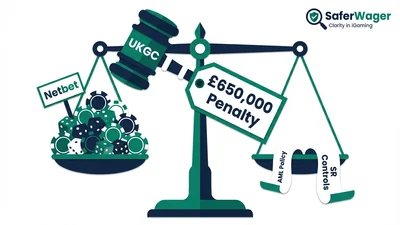
Netbet Enterprises Limited
Regulatory SettlementA regulatory review found failings in Netbet Enterprises Limited’s Anti-Money Laundering (AML) and Social Responsibility (SR) controls between October 2023 and July 2024. The operator failed to c...
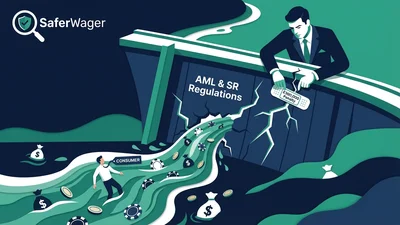
Maple International Ventures Limited
Regulatory SettlementFollowing a regulatory review, Maple International Ventures Limited was found to have failings in its Anti-Money Laundering and Social Responsibility controls between June 2023 and October 2024. Th...

Football Pools Limited
Regulatory SettlementA regulatory review found failings in the Licensee’s Anti-Money Laundering and Social Responsibility controls between September 2022 and August 2023. As a result of these failings, the company wi...

AG Communications Limited
Regulatory SettlementFollowing a regulatory review, AG Communications Limited was found to have failings in its Anti-Money Laundering (AML) and Social Responsibility (SR) controls. The operator agreed to a regulatory s...

Greentube Alderney Limited
Regulatory SettlementA regulatory review found failings in Greentube Alderney Limited’s Anti-Money Laundering and Social Responsibility controls between 2022 and 2023. The operator agreed to a regulatory settlement, ...

Hillside (UK Gaming) ENC
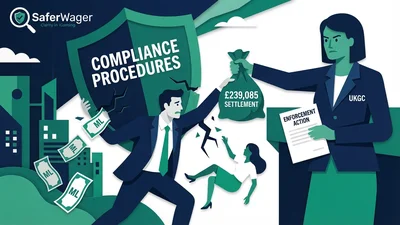
Regulatory SettlementFollowing a compliance assessment, the Gambling Commission found failings in Hillside's processes for preventing money laundering and protecting vulnerable customers between 2021 and 2022. The oper...
Hillside (UK Sports) ENC
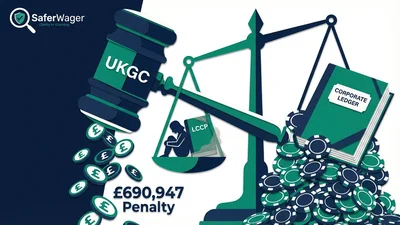
Regulatory SettlementFollowing a regulatory review, the Gambling Commission found failings in the operator's processes for preventing money laundering and protecting vulnerable customers between 2021 and 2022. The lice...
Lindar Media Limited
Regulatory SettlementA regulatory review found failings in Lindar Media Limited’s anti-money laundering (AML) and social responsibility processes between July 2021 and September 2022. The operator agreed to a regulat...

Done Brothers (Cash Betting) Limited
Regulatory SettlementA regulatory review found failings in the operator's processes for Safer Gambling and preventing Money Laundering between January 2021 and December 2022. As a result, the licensee voluntarily agree...

Videoslots Limited
Regulatory SettlementA regulatory review found failings in Videoslots' implementation of anti-money laundering (AML) and responsible gambling controls between October 2019 and February 2022. As part of a settlement, th...

Skill On Net Limited
Regulatory SettlementSkill On Net Limited was found to have failings in its anti-money laundering (AML) and safer gambling processes between January 2021 and December 2022. As part of a settlement, the operator will ma...

WHG (International) Limited
Regulatory SettlementA regulatory review found failings in WHG (International) Limited's safer gambling and anti-money laundering processes between May 2020 and October 2021. The operator agreed to a settlement that in...
Mr Green Limited
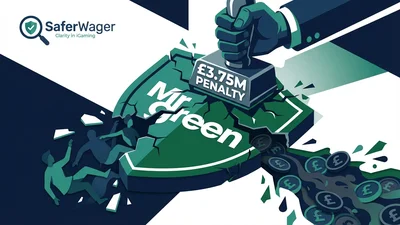
Regulatory SettlementA regulatory review found failings in Mr Green Limited's anti-money laundering and safer gambling processes between May 2020 and October 2021. As a result of the investigation, the operator agreed ...
William Hill Organization Limited
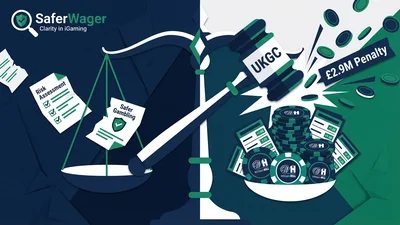
Regulatory SettlementFollowing a compliance assessment, a regulatory review found failings in William Hill's anti-money laundering (ML) and safer gambling processes between January 2020 and October 2021. The operator a...
Blue Star Planet Limited
Regulatory SettlementA regulatory review found failings in Blue Star Planet Limited’s processes for preventing money laundering and protecting vulnerable people between November 2019 and June 2021. The company agreed...
What Section 117 of the Gambling Act 2005 actually creates
Section 117 of the Gambling Act 2005 gives the Gambling Commission the power to accept a payment from a licence holder in lieu of pursuing formal proceedings to impose a financial penalty. It's a negotiated exit from a potential enforcement process, not a shortcut that bypasses accountability. Understanding what the section actually says is the starting point for reading any settlement announcement correctly.
The mechanism exists because formal enforcement proceedings are resource-intensive for both sides. The UKGC must investigate, document, notify, allow representations, and process appeals. Operators face prolonged licence uncertainty. Section 117 creates a route where the regulator can achieve its primary goals, operator remediation and a financial consequence, without completing the full formal process.
The key legal distinction: no formal finding of breach
The defining feature of a Section 117 settlement is that it doesn't conclude with a formal finding that the operator breached its licence conditions. The operator agrees to make a payment and typically agrees to remediation actions, but the UKGC doesn't issue a formal decision stating which specific Licence Conditions and Codes of Practice (LCCP) conditions were violated.
This matters for how the record reads. A formal enforcement action under Sections 116 or 119 of the Gambling Act 2005 produces a published decision with named breaches. A settlement doesn't. The UKGC will state what concerns led to the settlement being reached, and those concerns map onto recognisable LCCP areas, but the absence of a formal finding is a legally significant distinction.
How the negotiation process works
Settlement negotiations are typically confidential while they're ongoing. The UKGC opens a regulatory review under its compliance and enforcement procedures. If it identifies concerns that could lead to formal action, it may indicate willingness to consider a settlement. The operator then has the choice to engage with that process or proceed to formal proceedings. Most operators engage, because the formal proceedings route is slower, more expensive, and produces a published record with named breach findings.
The UKGC publishes guidance on how it approaches settlement negotiations, including factors it considers when setting the payment amount. Those factors include the nature and duration of the regulatory concern, the operator's cooperation, and the remediation actions the operator is prepared to commit to. None of this is contractual in a private law sense. It's a regulatory process that the UKGC controls.
- Section 117 settlement
- A mechanism under the Gambling Act 2005 where the UKGC accepts a payment from a licence holder in lieu of formal proceedings. Doesn't produce a formal finding of breach.
- Section 116 financial penalty
- A formal financial penalty following concluded enforcement proceedings, with a published decision and named LCCP breaches. Appealable to the First-tier Tribunal.
- Regulatory review
- The investigative process the UKGC opens when it identifies potential licence condition concerns. Can conclude in a settlement, formal action, or no further action.
- LCCP (Licence Conditions and Codes of Practice)
- The conditions attached to all UKGC operating licences. Social responsibility conditions and AML conditions are most frequently cited in settlement announcements.
Where settlement money goes and how amounts are calculated
One of the most misunderstood aspects of UKGC settlements is the destination of the money. Settlement payments don't go to the Gambling Commission itself. The UKGC isn't a revenue-raising body and it doesn't retain enforcement payments as income. Under the standard settlement structure, the operator pays into a UKGC-approved third party, almost always an organisation working in the gambling harm reduction space.
This is a deliberate policy. The logic is that gambling-related harm caused by the operator's regulatory failings should be partially addressed by directing funds toward harm reduction, rather than into consolidated public funds or regulator operating budgets. The UKGC approves specific organisations to receive these payments and publishes which organisations received funds from which settlements.
Third-party recipients and how they're approved
Organisations receiving settlement payments must be approved by the UKGC. In practice, recipients are typically charities or research bodies focused on gambling harm, problem gambling treatment, or safer gambling research. GamCare, the National Problem Gambling Clinic, and similar organisations have appeared as named recipients across published settlement records.
The operator doesn't choose the recipient freely. The UKGC approves the destination. That approval process is part of the regulatory outcome, not a concession to the operator. An operator can't direct a settlement payment to an organisation of its own choosing without UKGC agreement.
How payment amounts are calculated
The UKGC doesn't publish a formula for settlement amounts. The published guidance identifies the factors that influence the figure, but the calculation is specific to each case. Key factors are the scale and duration of the regulatory concern, the operator's gross gambling yield for the relevant period, the degree of cooperation during the review, and the remediation actions being agreed.
| Factor | What the UKGC considers | Effect on settlement amount |
|---|---|---|
| Duration of concern | How long the LCCP compliance issue was present | Longer duration typically increases the figure |
| GGY during period | Revenue generated while the concern existed | Higher GGY means a proportionally larger payment |
| Operator cooperation | Responsiveness to the UKGC review process | Good cooperation can reduce the amount |
| Remediation commitments | Concrete operational changes the operator agrees to | Substantive commitments can also reduce the figure |
| Prior regulatory history | Existing enforcement or settlement record | Repeat concerns increase the settlement amount |
The headline payment figure in a settlement announcement isn't always the total cost to the operator. Operators also fund their own legal advice, compliance reviews, and operational changes during the process. The third-party payment is the public-facing figure, but it sits alongside those internal costs.
Why operators prefer settlements over formal proceedings
The regulatory incentive structure behind settlements is straightforward. Formal enforcement proceedings under Part 6 of the Gambling Act 2005 produce an appealable decision with named breach findings. The record is permanent, the process is slow, and the outcome is uncertain. A settlement is faster, the final UKGC announcement doesn't include breach findings, and the operator retains operational certainty throughout.
That doesn't mean settlements are consequence-free. The UKGC publishes a case record for every settlement it reaches, and that record is publicly available. Settlements appear on operator profiles in the regulatory record. But the nature of what's documented differs meaningfully from a formal enforcement action.
The commercial and operational advantages for operators
During formal enforcement proceedings, an operator's licence can be subject to conditions or suspension. Settlements typically allow the operator to continue trading throughout, subject to agreeing remediation actions. That continuity has a real commercial value. A licence suspension, even temporary, affects revenue, staff confidence, and customer trust.
Operators also avoid the uncertainty of the Gambling Appeals Tribunal process. A formal penalty decision can be appealed to the First-tier Tribunal (General Regulatory Chamber), and an unsuccessful appeal can worsen the operator's position. Settling before that stage closes the uncertainty. It also avoids the cost of Tribunal proceedings, which can run to significant sums beyond the penalty itself.
What operators give up in a settlement
A settlement isn't purely advantageous for operators. The UKGC will typically require operational remediation alongside the payment. That might mean implementing new customer interaction systems, strengthening AML controls, restructuring compliance functions, or commissioning independent audits. These commitments bind the operator and become part of the settlement terms. Non-compliance would expose the operator to further regulatory action from a weaker starting position.
Note on the settlement record: The UKGC's published case record for a settlement typically describes the nature of the regulatory concerns and the remediation actions agreed, without stating that specific LCCP conditions were breached. Readers sometimes interpret the absence of a breach finding as regulatory clearance. It isn't. It means the process concluded without formal breach proceedings, which is a different statement. The concerns the UKGC identified are real regardless of how the process ended.
How Saferwager scores settlements in the severity framework
Saferwager's enforcement severity framework scores regulatory actions on a 1-5 scale, where 1 represents low-impact regulatory observations and 5 represents licence revocation or suspension. Settlements sit within that scale, but their position isn't fixed. It depends on the nature of the underlying regulatory concern, the size of the payment relative to the operator's scale, and whether the settlement is an isolated event or part of a pattern.
A settlement involving a large payment for serious AML or social responsibility failures scores differently from a settlement over a technical compliance matter. The absence of a formal breach finding doesn't reduce the severity score if the UKGC's own published case record describes substantive regulatory concerns.
Settlement scores versus direct penalty scores
In general, a settlement for the same underlying conduct scores slightly lower than a formal financial penalty would for the same conduct. This reflects the legal difference in outcome: a formal penalty confirms breach, a settlement doesn't. But the difference isn't large, because the severity framework is primarily concerned with the nature of the regulatory concern, not just its legal form.
An operator that has reached a settlement for AML failures sits in the same risk-elevated area of the Trust Score as an operator with a formal penalty for AML failures of similar scale. The scoring methodology treats the UKGC's published description of what went wrong as the primary input, because that description is present in both settlement and penalty records, even if the formal legal conclusion differs.
Settlement patterns across an operator's history
A single settlement has limited signal value in isolation. Multiple settlements, or a settlement following a previous formal enforcement action, create a pattern that the severity framework weights more heavily. This reflects what the UKGC itself indicates in its published guidance: repeat regulatory engagement over similar concerns is a factor that increases the appropriate regulatory response.
- First settlement, isolated concern: Moderate severity contribution to Trust Score. The regulatory concern is documented but the operator's overall record may be otherwise clean.
- Settlement following prior enforcement: Higher severity weighting. The pattern suggests compliance systems haven't addressed the underlying issue.
- Multiple settlements across different LCCP areas: Significant Trust Score impact. Multiple settlement areas suggest systemic compliance weakness rather than a contained failure.
- Large settlement relative to operator scale: The absolute payment size matters less than its proportion to the operator's GGY, which the UKGC typically references in its case record.
Operator profiles on Saferwager link to the full published settlement record for each action, so the UKGC's own case description is accessible alongside the severity score. That connection means the score is traceable to the original regulatory output, not just an abstract number.