
UK gambling licence suspensions: what they mean and how operators return to trading
A UKGC licence suspension removes an operator's authority to trade while a formal review continues. It's a conditional restriction, not a permanent loss. Understanding what suspension means in practice, for customers, for the operator, and for the eventual outcome, matters more than the headline enforcement label.
Filter by Action Type
Licence Suspensions List
GridRival UK Limited
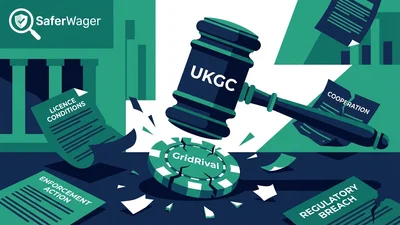
License SuspensionFollowing a review, the Commission found that GridRival UK Limited failed to comply with licence conditions regarding regulatory returns, qualified persons, and reporting key events. The licensee a...
What a licence suspension means in practice for an operator and its customers
When the UKGC suspends a gambling licence, the operator's authority to provide gambling facilities in Great Britain is removed with immediate effect from the suspension date. That means no new bets, no new deposits, no new account registrations. Existing customers can't access their accounts to withdraw funds unless the UKGC's suspension terms specifically allow a withdrawal-only period. In most cases, the suspension locks the account entirely until the UKGC's review concludes.
The practical experience for a customer of a suspended operator closely resembles what happens when a site goes offline: the account is inaccessible, pending withdrawals are frozen, and the operator's customer support may be limited or non-responsive during the suspension period. The difference from a temporary technical outage is that the suspension is a regulatory action with no fixed end date.
The customer's position during a licence suspension
Customers of a suspended operator are in a difficult position. Their funds are held but inaccessible. There's no UKGC-mandated timeline for resolving the suspension. The outcome of the licence review that follows could be reinstatement, additional conditions, or revocation. If the operator ultimately loses its licence, customers enter the same uncertain position they'd face in a revocation outcome: claim-making through an insolvency or wind-down process, with uncertain recovery depending on the fund protection level the operator maintained.
The UKGC's LCCP social responsibility code provision 4.2.1 requires operators to have policies for returning customer funds if they cease trading, but suspension doesn't automatically trigger those policies. The policies become relevant if the suspension leads to revocation or the operator is wound up. During the suspension itself, fund return depends on whether the UKGC's suspension conditions allow it.
Why suspension rather than immediate revocation
The UKGC uses suspension when it has serious concerns but hasn't yet concluded that revocation is the proportionate outcome, or when it needs to prevent ongoing consumer harm while the investigation continues. Suspension isn't a finding that the operator will lose its licence. It's a precautionary measure that removes the risk of continued trading while the review is live.
Suspension is not a lesser version of revocation: A suspension can be lifted and the operator can return to trading. It can also convert to revocation if the review concludes the operator is unfit to continue. News coverage often treats suspension as a step toward revocation because that's the more dramatic outcome, but many suspensions are resolved with the operator returning to trading under additional conditions. The outcome isn't predetermined at the point of suspension.
The conditions the UKGC attaches for lifting a suspension
A licence suspension doesn't end automatically. The UKGC specifies, either at the point of suspension or during the review process, what the operator needs to do to have the suspension lifted. Those conditions vary significantly depending on why the suspension was imposed. A suspension following concerns about key personnel will require different remediation from one imposed because of systematic AML failings.
The common thread across suspension conditions is that they require the operator to demonstrate concrete change, not just commit to it. Announcements that management will be improved or that new policies are in place aren't sufficient. The UKGC typically requires evidence: independent audit results, documented compliance programme overhauls, personnel changes with confirmation of who has left and who has taken over, and often a period of enhanced reporting after reinstatement before the additional oversight is removed.
Common remediation requirements in suspension cases
- Independent compliance audit covering the specific areas that triggered the suspension, conducted by an auditor approved by or acceptable to the UKGC. The audit report must be submitted to the Commission and typically must make specific findings about whether the identified failings have been addressed.
- Management and personnel changes where the suspension grounds involved key individuals. The operator must confirm who has left the business, evidence that the departing personnel no longer have influence over the operation, and provide fit-and-proper information on replacements.
- Documented system and process overhaul for the specific LCCP conditions that were breached. The operator must show the policies, the systems, and the operational changes, not just assert that they've been made.
- Enhanced regulatory reporting as a post-reinstatement condition. This typically involves the operator submitting compliance reports to the UKGC at specified intervals for a defined period after the suspension is lifted, allowing the Commission to monitor whether the remediation is sustained in practice.
How long suspensions typically last
There's no standard suspension duration. The UKGC's formal timelines for licence reviews allow for significant variation depending on the complexity of the case, the volume of evidence, and how quickly the operator engages with the process. Simple cases involving clear, limited failings where the operator cooperates promptly can be resolved in a matter of weeks. Cases involving complex corporate structures, criminality concerns running in parallel with enforcement, or operators that contest the UKGC's findings can extend for many months.
Operators don't earn revenue during a suspension. That economic pressure is part of why most suspended operators engage cooperatively with the UKGC's remediation requirements rather than contesting the process. An extended suspension that converts to revocation is a far worse commercial outcome than a swift remediation that allows trading to resume.
When suspension leads to reinstatement vs when it converts to revocation
The direction a suspension takes, toward reinstatement or revocation, depends on what the UKGC's review finds and how the operator responds. Suspension imposed while serious concerns are investigated can convert to revocation if those concerns are confirmed and the operator can't demonstrate that the identified failings reflect isolated incidents rather than systemic conduct.
Reinstatement is more likely where the operator engages fully with the review, meets the remediation conditions, and demonstrates that the failings were correctable. It's less likely where the review uncovers additional problems beyond those that triggered the suspension, where key personnel changes reveal deeper corporate issues, or where the operator fails to meet the conditions within an acceptable timeframe.
Factors that favour reinstatement
Operators that move quickly to address identified failings, cooperate with UKGC evidence requests, and engage experienced compliance consultants to support the remediation process generally fare better than those that contest the suspension grounds or take a minimal-effort approach to the compliance requirements. The Commission's published outcomes suggest that demonstrating genuine change, rather than technical compliance with stated conditions, is what distinguishes suspensions that end in reinstatement from those that escalate.
Where an operator's suspension was triggered by concerns about a specific individual rather than systemic operational failings, addressing the personnel issue can resolve the UKGC's concerns relatively quickly. A suspension that follows a formal AML or social responsibility review and reflects widespread compliance failure is inherently harder to remediate because the scope of change required is larger.
Reinstatement conditions and ongoing monitoring
An operator whose licence is reinstated after suspension typically doesn't return to the same conditions it operated under before. Additional licence conditions are common. These can include enhanced AML monitoring requirements, mandatory compliance audits at specified intervals, restrictions on the types of products the operator can offer, limits on marketing activity, or requirements to notify the UKGC before making material changes to the business.
- Unconditional reinstatement
- The suspension is lifted and the operator returns to trading without additional licence conditions beyond those it held before. Relatively uncommon. Usually reserved for cases where the suspension was precautionary and the review found no substantive failings to address.
- Conditional reinstatement
- The suspension is lifted but the operator's licence is modified with additional conditions that reflect the failings identified during the review. The operator must continue meeting those conditions or faces further enforcement action.
- Extended review
- The UKGC continues its review after initial remediation steps, deferring the reinstatement or revocation decision. Typically happens when the Commission needs more evidence or wants to assess whether early compliance steps are sustained before making a final determination.
How licence suspensions feed into Saferwager severity scoring and Trust Scores
Licence suspensions in Saferwager's enforcement index are rated on the 1-to-5 severity scale based on the grounds and context of the suspension, not just the fact that a suspension occurred. A precautionary suspension imposed while the UKGC investigates a specific concern, which is then lifted after remediation, sits at a different severity level from a suspension that follows a pattern of serious ongoing breaches and runs for an extended period before converting to revocation.
Suspensions typically rate 4 to 5 on the severity scale. They score higher than financial penalties or settlements that don't restrict trading because a suspension represents a more immediate regulatory intervention. The UKGC doesn't suspend a licence over minor concerns. The fact that a suspension was imposed signals the Commission concluded the risk to consumers was serious enough to warrant removing trading authority immediately rather than waiting for the review to conclude.
The difference between a resolved suspension and a suspension that converts to revocation
A suspension that ends in reinstatement and a suspension that converts to revocation are both recorded in the enforcement index. The severity rating differs. A suspension that converted to revocation carries the revocation severity (always 5) as the defining enforcement event. A suspension that ended in reinstatement is rated based on the grounds and duration of the suspension, and the subsequent clean record, if it exists, feeds into the recency weighting of the Trust Score's enforcement sub-score.
An operator that was suspended, remediated, and returned to trading several years ago with no subsequent enforcement action is in a different position from one that was suspended recently or whose suspension was followed by further enforcement activity. The Trust Score reflects that through recency weighting.
Customer-facing signals and what suspension history tells consumers
| Suspension outcome | Severity score | What it signals | Recency weighting effect |
|---|---|---|---|
| Suspension, then reinstatement with conditions | 4 | Serious failings identified and addressed, ongoing compliance monitoring required | Weight decreases over time if no subsequent enforcement; conditions remain flagged |
| Suspension, then revocation | 5 (revocation applies) | UKGC concluded operator unfit to continue; suspension was precursor to full enforcement | Revocation carries maximum weight, no decay applied to revocations for cause |
| Extended suspension, then reinstatement | 4-5 depending on grounds | Prolonged serious concern, remediation complex or contested | Extended duration increases severity rating; subsequent clean period reduces weight gradually |
| Precautionary suspension, resolved quickly | 4 | UKGC acted on concerns; operator cooperated; failings addressed | Faster decay in enforcement sub-score weight if no further enforcement activity follows |